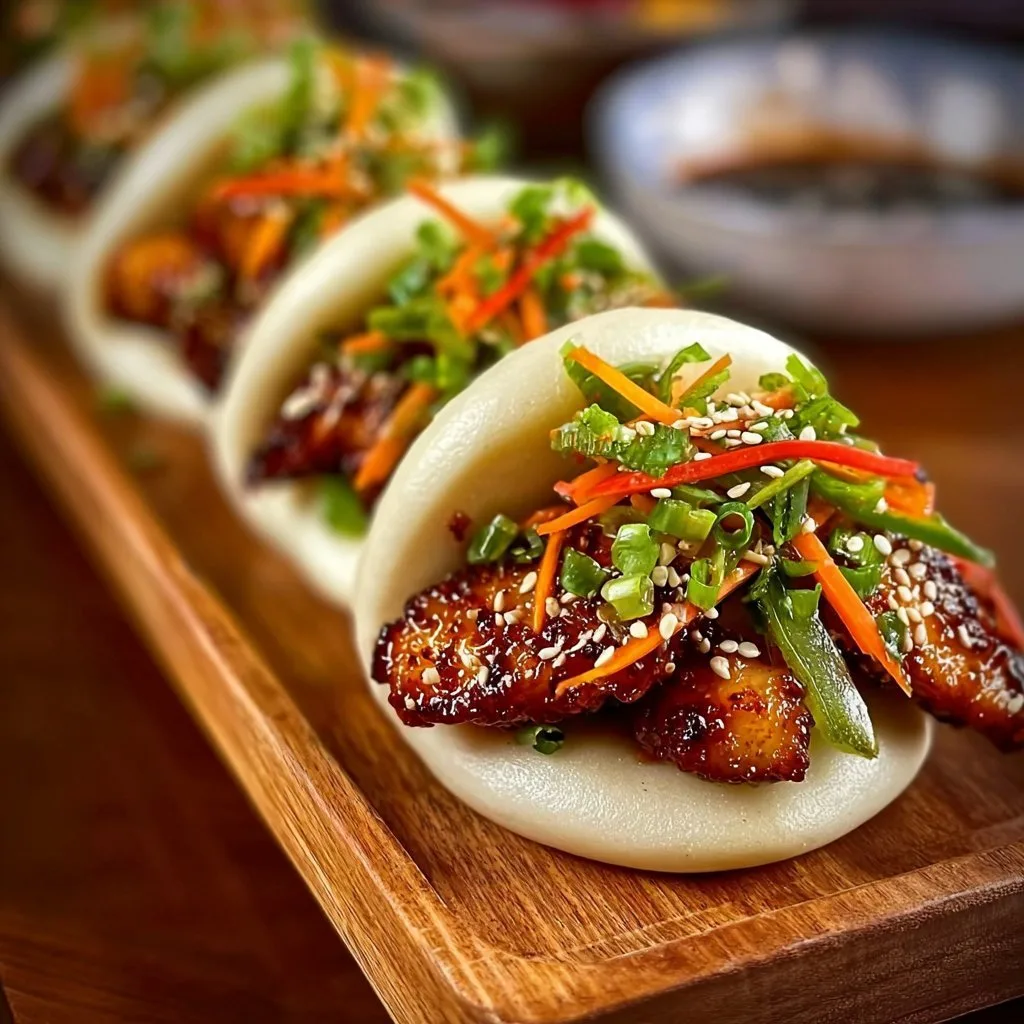
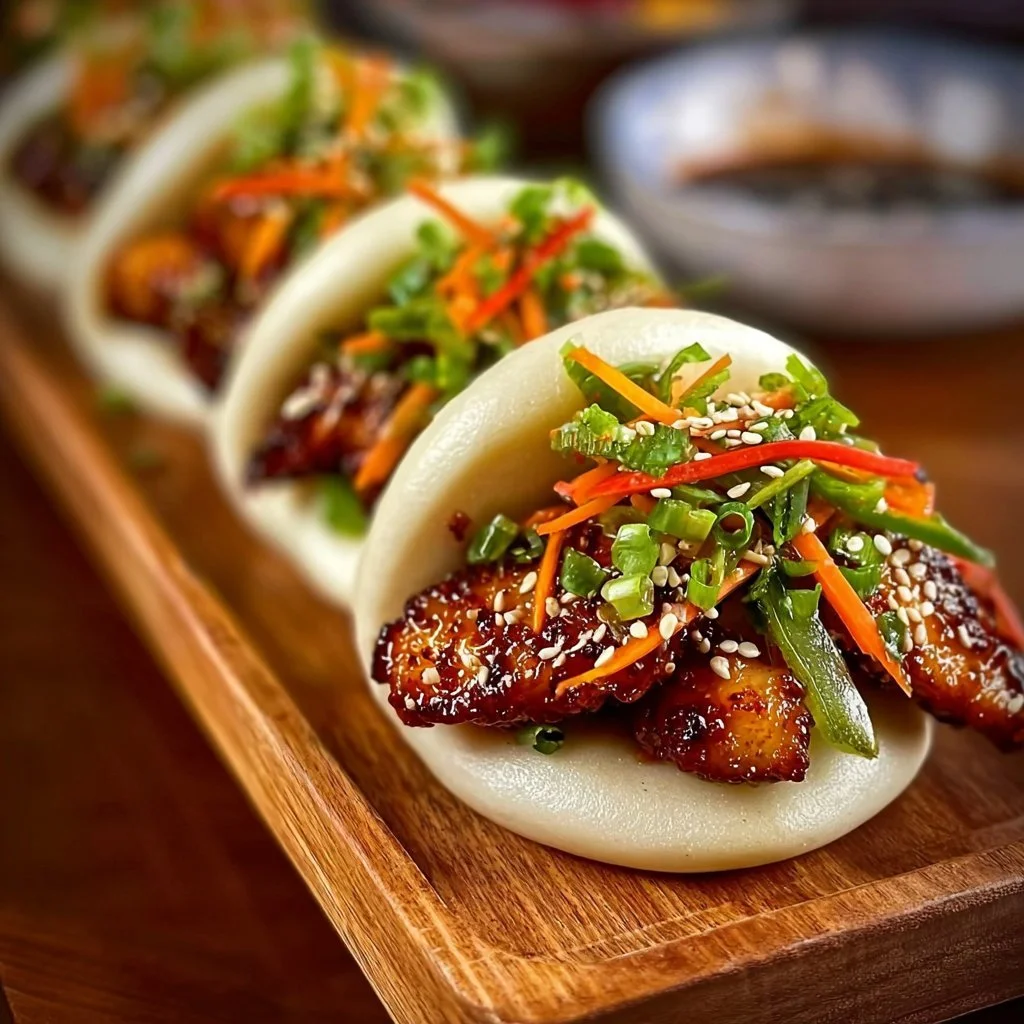
Introducing Korean Chicken Bao Buns
If your family is looking for a delightful meal rich in flavor and warmth, look no further than Korean Chicken Bao Buns. These fluffy, steamed buns are filled with succulent chicken that has been marinated in a medley of sweet and spicy Korean flavors. As you carve into the pillowy-soft bao, you’ll notice the rich aroma wafting from the inside, a tantalizing combo of sesame and garlic that awakens the senses. Each bite offers a perfect symphony of textures—from the tender chicken to the light, airy bun—making it a hit for weeknight dinners or special gatherings alike.
Imagine gathering around the table, the warm, inviting scent of garlic and ginger infusing your home, as the kids eagerly anticipate their first taste. The vibrant colors of the garnishes—crunchy green cabbage and bright red kimchi—create a visually stunning presentation that promises satisfaction for the taste buds as well. Korean Chicken Bao Buns are not only a treat to the palate, but they also open up an opportunity for family bonding through cooking together. So, let’s roll up those sleeves and dive into this delightful culinary adventure!
Understanding Korean Chicken Bao Buns
Korean Chicken Bao Buns are a delightful fusion of traditional Chinese bao and savory Korean flavors. The dish hails from East Asia, specifically where bao originated—steamed buns filled with various meats, vegetables, or sweet fillings. The Korean twist comes from using ingredients like gochujang (sweet and spicy chili paste), sesame oil, and garlic, which infuse the chicken with a depth of flavor unlike any other. Traditionally, these bao buns are served at street food stalls in Korea, where locals enjoy them on-the-go or at home during special occasions.
What makes this recipe even more appealing is how versatile it is for busy families. By using a slow cooker or air fryer, the flavors deepen while reducing hands-on cooking time. The slow cooker allows for a hands-off approach, resulting in incredibly tender chicken that can absorb all the delightful spices, whereas the air fryer gives the chicken a crispy outer layer while keeping the inside juicy. These buns are typically served as a snack or a meal, accompanied by fresh vegetables or pickles, making them a perfect option for any mealtime. Fun fact: bao buns have gained popularity worldwide, leading to countless variations based on regional tastes and preferences!
Why You’ll Love This Recipe
There are countless reasons to fall in love with Korean Chicken Bao Buns.
- Ease of Preparation: The ingredient list is simple and primarily consists of pantry staples. With just a few steps, you’ll have a delicious meal ready in no time, perfect for weeknight dinners.
- Flavor Complexity: The combination of gochujang, garlic, and sesame oil creates a rich tapestry of flavors that is both savory and slightly sweet, appealing to a wide variety of palates.
- Family-Friendly or Kid-Approved: Children love the fun of assembling their bao and can customize their fillings with fresh veggies and sauces, making this meal both interactive and delightful.
- Budget-Friendly or Ingredient Flexibility: You can easily substitute the chicken with tofu or vegetables for a vegetarian version without sacrificing flavor, giving you flexibility based on what you have on hand.
- Perfect for Gatherings: Korean Chicken Bao Buns can be made ahead of time and served at parties or potlucks, allowing guests to enjoy a taste of Korea in a fun and approachable way.
Your Guide to Making Korean Chicken Bao Buns at Home
Making Korean Chicken Bao Buns at home is a fun and rewarding experience that’ll have your kitchen filled with enticing aromas. With just a few tools—a slow cooker or air fryer, and a steam basket—you’ll have everything you need for this delightful dish. Expect the entire preparation time to take about 1.5 to 2 hours, including marination and cooking time.
Ingredients:
- Chicken Thighs (1 pound): Juicier and more flavorful than chicken breasts, thighs absorb marinades better.
- Gochujang (2 tablespoons): Adds a distinct spiciness and depth of flavor; can be replaced with sriracha for a milder option.
- Soy Sauce (3 tablespoons): Enhances umami and adds a saltiness to balance the sweet elements.
- Honey (1 tablespoon): Provides sweetness and helps caramelize the chicken; maple syrup can be a substitute for a vegan option.
- Garlic (2 cloves, minced): Infuses the chicken with rich, aromatic flavor; garlic powder can be used in a pinch.
- Sesame Oil (2 teaspoons): Gives the dish a nutty aroma and flavor; can be replaced with olive oil, but it won’t have the same character.
- Bao Buns (store-bought or homemade): Offer a pillowy, comforting vehicle for the chicken filling.
- Cabbage or Pickles (for garnish): Adds freshness and texture contrast—don’t skip this!
Directions:
-
Marinate the Chicken: In a mixing bowl, combine the soy sauce, gochujang, honey, minced garlic, and sesame oil. Add the chicken thighs, ensuring they are well-coated, and let them marinate for at least 30 minutes.
-
Cook the Chicken: If using a slow cooker, place the marinated chicken inside and cook on low for 4 hours or high for 2 hours. Alternatively, set the air fryer to 375°F and cook for about 18-20 minutes or until the chicken is cooked through and charred slightly.
-
Shred the Chicken: Once cooked, remove the chicken from the slow cooker or air fryer. Let it cool slightly before shredding it with two forks to create tender, juicy pieces.
-
Steam the Bao Buns: Fill a pot with water and bring it to a boil. Place the bao buns in a steamer basket and steam for about 10-12 minutes or until they are fluffy and warm. They should be soft and pillowy to the touch.
-
Assemble the Bao Buns: Take a steamed bun and fill it with the shredded chicken. Top with fresh chopped cabbage or pickles for a crunchy contrast, and drizzle with extra gochujang or a sesame sauce if you like it spicy.
-
Serve Warm: Arrange the assembled bao on a platter and serve them hot, allowing everyone to enjoy this delicious dish right away for the best texture and flavor.
-
Leftovers Storage: If you have any leftovers, store them in an airtight container in the refrigerator for up to 2 days.
Delicious Pairings for Korean Chicken Bao Buns
Korean Chicken Bao Buns are perfect on their own, but they can be paired with various sides to elevate the meal.
- Korean BBQ Sides: Serve with kimchi and pickled radish for a tangy crunch that complements the rich flavors.
- Rice Noodle Salad: A light and refreshing side salad with sesame dressing will add a cool contrast to the warm bao.
- Crispy Potato Chips: For a fun twist, add a side of crispy sweet potato chips that balance sweetness with crunch.
- Korean Fried Chicken: For a feast, pair these buns with Korean fried chicken for a double dose of flavor.
- Refreshing Beverages: To wash it all down, try cold barley tea or a light fruit-infused beverage.
Top Tips for Perfecting Korean Chicken Bao Buns
Achieving perfection in making Korean Chicken Bao Buns is all about technique and attention to detail.
- Ingredient Swaps or Upgrades: Consider using dark soy sauce for a richer flavor or adding sesame seeds on top for crunch.
- Spice Adjustments: Adjust the gochujang according to your heat preference; reduce it for a milder taste suitable for kids.
- Equipment Advice: Invest in a good steamer basket for perfect buns; avoid overfilling it to allow for proper steaming.
- Storage Tips: Keep bao buns separate from fillings when storing leftovers to maintain texture.
- Mistakes to Avoid: Be careful not to over-steam the bao, or they can become too sticky; keep an eye on them while they cook.
Variations & Add-Ins
Korean Chicken Bao Buns can easily be customized to suit your tastes and dietary preferences.
- Spicy BBQ Pork Version: Swap chicken for pork marinated in a Korean BBQ sauce for a unique twist.
- Vegetarian Option: Use marinated tofu or mushrooms for a veggie version that doesn’t skimp on flavor.
- Sweet and Sour Pineapple: Add pineapple chunks to the shredded chicken for a sweet and tangy contrast.
- Vegan Option: Replace honey with agave syrup and use plant-based chicken to keep it vegan-friendly.
Kid-Friendly Version
Making Korean Chicken Bao Buns kid-friendly is all about adjusting flavors and presentation. You can keep the spice levels mild by reducing gochujang and replacing it with a less spicy sauce, or even a honey-garlic sauce for sweetness that children often enjoy. Encourage kids to personalize their bao with extra fillings or toppings such as shredded carrots or extra cucumber slices for crunch, making the meal more interactive and fun! The soft, yet sturdy buns allow little hands to hold them easily—perfect for curious eaters wanting to explore different flavors.
Storing and Reheating Tips
Storing your Korean Chicken Bao Buns properly ensures that they remain delicious for days to come. Place any leftover bao and chicken into an airtight container—this is crucial to prevent them from drying out. The ideally refrigerated leftovers should be consumed within 2-3 days for the best taste. If you’ve assembled the bao, consider storing the buns and fillings separately to maintain texture.
To reheat, you have several options. The stovetop steamer method works best—simply add water and steam for about 5 minutes until heated through. If you’re short on time, the microwave can be used, but be sure to wrap each bao in a damp paper towel to keep them from turning tough. Avoid rebaking in the oven; while convenient, it risks drying out the buns. Any frozen leftovers should be thawed in the refrigerator overnight before reheating for optimal texture.
FAQs
Q: Can I prepare the chicken ahead of time?
Yes! You can marinate the chicken a day in advance, allowing the flavors to deepen, making it a breeze to simply cook the following day.
Q: What can I substitute for gochujang if I can’t find it?
Sriracha or any chili paste can be substituted, but consider adding a tad of honey to mimic the sweetness of gochujang.
Q: Are there any good vegetarian options?
Absolutely! Tofu or a variety of vegetables seasoned similarly can make a fantastic vegetarian option without losing the essence of this dish.
Q: How long can I keep leftovers?
Stored properly, leftovers will last 2-3 days in the fridge, making it a great option for meal prepping.
Q: What can I serve with Korean Chicken Bao Buns?
They pair beautifully with a variety of sides like pickled vegetables, rice noodle salad, or simply crispy potato chips for a balanced meal.
Conclusion
Korean Chicken Bao Buns are an enchanting combination of flavor, texture, and fun that your entire family will love. The ease of preparation and the engaging experience of making these buns will elevate your mealtime, whether it’s a casual weeknight dinner or a festive gathering. So why not make tonight a special occasion? Try making Korean Chicken Bao Buns, and let the delightful flavors dance on your palate! Let me know how it turned out!