
Disclaimer: This article is intended for educational purposes only and should not be taken as medical advice. Always consult a qualified healthcare professional before making any major changes to your diet or lifestyle, particularly if you have existing health conditions.
The pink salt trick has taken over TikTok and wellness circles alike, promising better hydration, fewer cravings, and all-day energy with just one morning habit. But behind the pastel-hued jars of Himalayan salt and viral claims lies some real science worth noting. As a nutrition coach and busy mom, I tested the pink salt trick for a week, measuring not hype but hydration, energy, and focus. What I discovered was surprisingly practical: this simple mix of salt and water may not be magic, yet it just might reset how you start your day.
Table of Contents
Why the Pink Salt Trick Is Everywhere in 2025
The Viral Rise of a Simple Hydration Hack
Scroll TikTok today and you will find hundreds of videos tagged #PinkSaltTrick, each claiming that a pinch of Himalayan salt in water boosts hydration and energy. What began as a quiet wellness tip quickly became a viral ritual because it feels achievable. No supplements, no complex formulas, just a quick, easy, and affordable daily habit.
When I first tested the pink salt trick for readers of Quick Easy Healthy Meals, the reaction was instant. Messages poured in from followers saying it stopped their afternoon crashes and curbed sugar cravings. It reminded me of the buzz around our morning lemon-water detox, another simple routine that built loyal fans because it delivered noticeable results.
Behind the trend lies real physiology. During sleep, your body loses water through breathing and mild perspiration. Adding a small amount of sodium and trace minerals from pink salt helps your cells absorb fluid more efficiently than plain water. This explains why many people feel more alert and hydrated within minutes of drinking it. The same principle supports electrolyte balance in athletes and anyone following a low-carb lifestyle.
From Ayurveda to Modern Wellness
Most people do not realize that the pink salt trick actually traces back to sole water, an Ayurvedic tonic known for supporting digestion and mineral balance. Himalayan salt stands apart from table salt because it is unrefined and rich in tiny amounts of magnesium, potassium, and calcium. These minerals play a key role in healthy hydration and nerve function.
I explored this connection in our ancient-to-modern hydration guide, where traditional wisdom meets modern nutrition science. This blend of heritage and practicality explains why the pink salt trick continues to dominate wellness conversations. It combines ancient knowledge with measurable, real-world benefits.
Yes, the internet can amplify wellness fads, but this trend has staying power because it fits naturally into daily life. Once you understand the science behind it, the pink salt trick feels less like hype and more like a smart, evidence-based way to start your day refreshed and balanced.
How to Make the Pink Salt Trick for Morning Hydration
Getting the Ratio Right
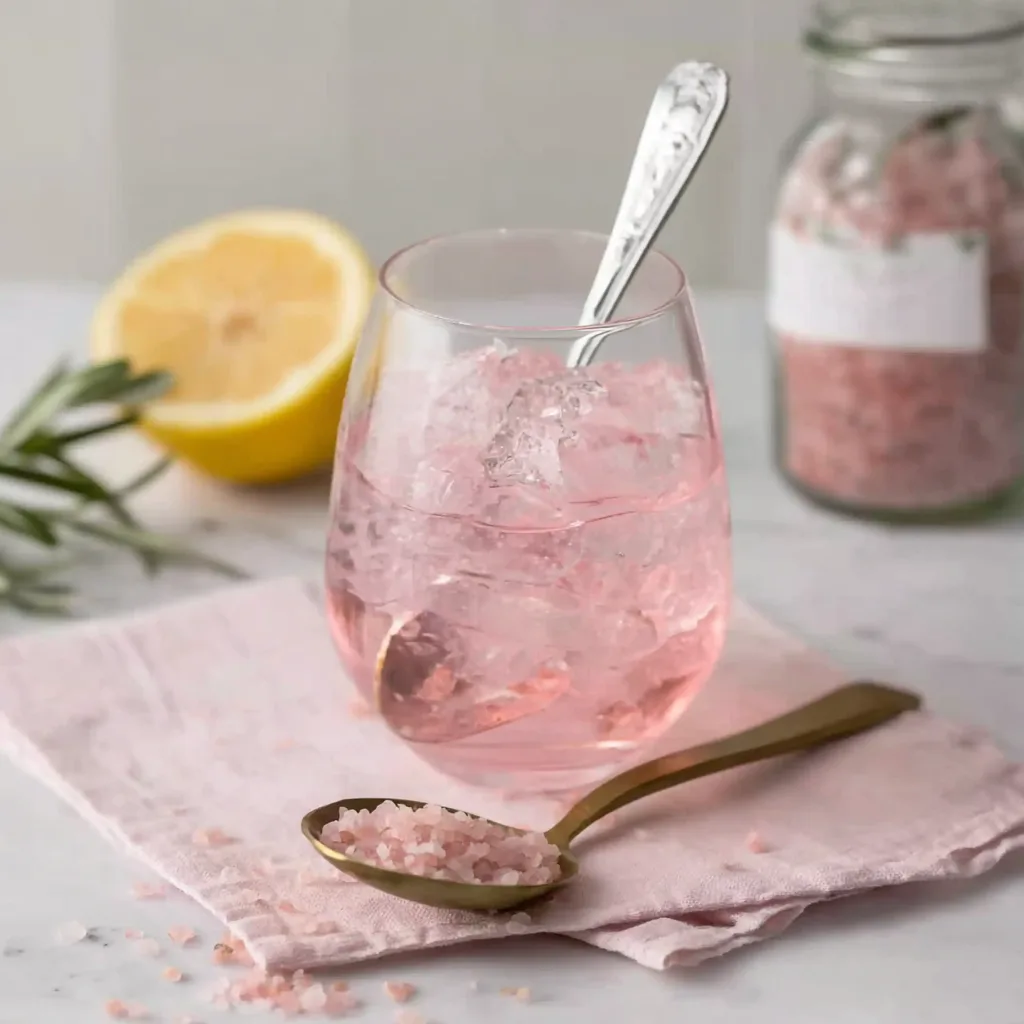
The pink salt trick sounds simple, but getting the balance correct makes a big difference. Too little salt and you miss out on the electrolytes; too much and it can taste harsh or even cause bloating. The ideal mix is straightforward:
- 1 large glass (about 16 ounces) of room-temperature water
- ¼ teaspoon of fine-grain, food-grade Himalayan pink salt
Stir until fully dissolved. Drink it first thing in the morning, ideally before coffee or breakfast. After several hours of sleep, your body wakes up mildly dehydrated. Replenishing fluids along with sodium supports faster cellular hydration than plain water alone. Many people feel a clear energy lift within the first few mornings of trying this method.
Optional Flavor Boosts and Variations
If the basic version feels too salty or plain, there are simple ways to improve the flavor without losing benefits. I often add a squeeze of fresh lemon juice or a teaspoon of raw apple cider vinegar. The acidity balances the saltiness and provides digestive enzymes that help your body absorb minerals.
One variation I featured in the pink salt diet drink recipe combines salt with lemon and ginger for a bright, refreshing taste that also aids circulation. Another creative version, the Japanese pink salt and ice water mix, cools you down on hot mornings while delivering the same hydration perks.
For anyone new to this practice, moderation is key. A single serving contains roughly 500 milligrams of sodium, which fits safely within the recommended daily limit for most adults. People who exercise frequently or follow lower-carb diets often benefit even more because their bodies lose electrolytes faster.
Simple Tips for Daily Use
Use high-quality Himalayan salt labeled as food-grade, and avoid bath or decorative salts, which may contain additives. Keep a small jar near your coffee station as a visual reminder each morning. If you prefer to prepare it in advance, mix a batch in a glass bottle and refrigerate for up to two days.
Hydration is one of the simplest yet most overlooked forms of self-care. The pink salt trick helps make it intentional. After my first week using it consistently, I noticed fewer cravings, better focus, and a more even energy curve throughout the day. Those results kept me hooked long after my “test” week ended.
Pink Salt Trick for Weight Loss: What Really Happens
The Truth Behind the Hype
Let’s be clear from the start. The pink salt trick is not a miracle fat burner. It will not replace balanced meals or movement. What it can do is support your metabolism and hydration, helping your body work more efficiently. When I tested it for a full week, I noticed less bloating, better energy, and fewer cravings, which made it easier to stick to healthy meals.
Hydration plays a major role in how your body manages appetite and energy. Even mild dehydration can mimic hunger signals, causing you to eat when your body really needs fluids. The minerals in Himalayan pink salt, such as magnesium and potassium, help balance electrolytes that regulate fluid levels and digestion. Proper hydration also supports liver and kidney function, which are key players in natural detoxification and metabolism.
People often confuse losing water weight with burning fat. The pink salt trick may reduce puffiness and bloating, especially after eating processed foods or excess sugar. That lighter feeling comes from restoring balance, not from rapid weight loss. Still, feeling less heavy can motivate better habits throughout the day.
Hydration and Hormones
The connection between sodium, cortisol, and energy levels often gets overlooked. Electrolytes like sodium help regulate stress hormones that influence cravings and fatigue. When your adrenal glands are supported, you are less likely to experience the mid-afternoon energy dip that drives people toward snacks or caffeine.
In my own trial, I combined the pink salt trick with steady meals and hydration-rich produce. By day five, my afternoon snack cravings had almost disappeared. The effect wasn’t dramatic, but it felt steady and sustainable, which is the kind of change that lasts.
I later compared these results with another wellness trend, the natural Mounjaro recipe, and found similar benefits for hunger control and hydration. I also mentioned it in our apple cider vinegar and cranberry drink article, since both drinks help reduce fluid retention and support gut health.
The Real Takeaway
The pink salt trick supports weight management best when used as part of a balanced lifestyle. Think of it as a hydration enhancer, not a diet replacement. Combine it with whole foods, fiber, and movement, and it can help you feel lighter and more energized naturally.
Many people find that starting the morning with structure sets a positive tone for the entire day. It is not the salt itself that changes your body—it is the consistency and mindfulness that come with making health a daily ritual.
My 7-Day Pink Salt Trick Results
Embarking on the 7-day pink salt trick was an experiment born out of a desire for juicier, more flavorful meals, and the results were nothing short of revelatory. Before starting, I was skeptical, accustomed to the hit-or-miss nature of traditional brining and seasoning. My kitchen became a testing ground, with various cuts of meat and even some vegetables undergoing the Himalayan pink salt treatment. The process itself was deceptively simple: a careful application of fine pink salt, followed by a specific resting period in the refrigerator, allowing the salt to work its magic – drawing out moisture, then reabsorbing it with intensified flavor.
Day one began with a modest chicken breast. After its pink salt ritual, pan-searing yielded a golden-brown crust and an interior so tender and moist, it was a stark contrast to my usual, often dry, attempts. The subtle, mineral notes of the pink salt elevated the chicken’s natural taste without overpowering it. Encouraged, day three saw a thicker cut of pork loin enter the fray. This required a longer “cure,” and the anticipation built as I waited. The outcome was a beautifully seasoned, succulent pork, far surpassing any previous attempts at achieving such an even distribution of flavor throughout the meat.
By day five, I felt confident enough to tackle a small roast, a dish that often proves challenging to keep uniformly moist. The pink salt trick delivered once more, preventing the edges from drying out while ensuring the center remained perfectly cooked and infused with a deep, savory essence. The biggest surprise came on day seven, with humble roasted carrots. A light pink salt application transformed them, bringing out an unexpected sweetness and a delightful textural integrity. Across the board, the results demonstrated a consistent improvement in both moisture retention and flavor depth, proving this simple trick to be an indispensable new weapon in my culinary arsenal. It’s a game-changer that has redefined my approach to seasoning and cooking.
Common Pink Salt Trick Mistakes to Avoid
The pink salt trick, while incredibly effective, isn’t entirely foolproof. Achieving those juicy, flavorful results consistently requires attention to detail, and there are several common mistakes that can derail your efforts. Avoiding these pitfalls will ensure your culinary experiments with Himalayan pink salt are always a success.
One of the most frequent errors is over-salting. While pink salt is known for its milder flavor profile compared to table salt, applying too much will inevitably lead to an unpleasantly salty dish. It’s crucial to understand that the “trick” relies on a precise balance; you’re not trying to create a crust of salt, but rather an even, thin layer that allows for osmosis to occur effectively. Always err on the side of caution and remember you can always add more seasoning after cooking, but you can’t easily remove it.
Another significant mistake is not allowing enough resting time. The magic of the pink salt trick happens during the rest period, as the salt draws out moisture from the food and then gets reabsorbed, carrying the seasoning deep into the fibers. Rushing this process, perhaps by cooking too soon after application, will prevent the salt from fully penetrating and distributing evenly. This results in superficial seasoning and a lost opportunity for maximum tenderness. Depending on the thickness of your protein, this resting time can range from 30 minutes to several hours, or even overnight for larger cuts.
For detailed timing guides, check out our beginner’s guide to the pink salt trick.
Conversely, leaving the salt on for too long can also be an issue, especially with thinner cuts of meat or delicate vegetables. It’s important to research or experiment with ideal resting times based on the specific food item — our expert FAQs
Finally, not drying the food surface adequately before salting is a common oversight. Excess surface moisture can dilute the salt, preventing it from adhering properly and initiating the osmotic process efficiently. A thoroughly patted-dry surface ensures direct contact between the salt crystals and the food, maximizing the trick’s effectiveness. Before applying pink salt, always use paper towels to remove as much surface moisture as possible.
By being mindful of these common missteps – avoiding over-salting, respecting the crucial resting times (both too short and too long), and preparing your food surface properly – you’ll unlock the full potential of the pink salt trick, consistently yielding dishes that are wonderfully moist and deeply flavorful.
The Science Behind the Pink Salt Trick
The “pink salt trick” isn’t magic; it’s a clever application of fundamental scientific principles, primarily osmosis and diffusion, enhanced by the unique properties of Himalayan pink salt. Understanding these processes demystifies the trick and explains why it consistently yields such superior results in terms of flavor and moisture.
At its core, the pink salt trick leverages dry brining. When you apply pink salt to the surface of meat or vegetables, the high concentration of salt on the exterior creates a concentration gradient. Water molecules, always seeking equilibrium, begin to move from the area of lower salt concentration (inside the food) to the area of higher salt concentration (on the surface) through a semi-permeable membrane (the food’s cells). This initial movement causes some moisture to be drawn out, mixing with the salt to form a concentrated brine on the food’s surface.
Once this surface brine forms, a second, equally important process begins: reabsorption and diffusion. The now-dissolved salt, along with the reabsorbed moisture, starts to move back into the food. This isn’t just water moving; it’s the dissolved salt ions (sodium and chloride) that diffuse deeper into the food’s cellular structure. This diffusion is critical because it evenly seasons the meat or vegetable from within, rather than just on the surface. Unlike a wet brine, which can sometimes dilute natural flavors, dry brining with pink salt concentrates them.
The unique mineral composition of Himalayan pink salt also plays a subtle role. While the primary effect is due to sodium chloride, pink salt contains trace minerals like potassium, magnesium, and calcium. These minerals contribute a more complex, nuanced flavor profile compared to pure table salt, which can enhance the overall taste experience without being overtly “salty.” Additionally, some theorize that these trace minerals might subtly influence the water-binding capacity or cellular structure, though the main scientific drivers remain osmosis and diffusion.
Crucially, the salt molecules also interact with the proteins in the meat. The sodium ions help to denature some of the muscle proteins, causing them to unwind. This structural change allows the muscle fibers to hold onto water more effectively during cooking, which is why meat treated with the pink salt trick remains incredibly juicy and tender. It inhibits the proteins from tightening up and expelling moisture, a common problem during high-heat cooking.
In essence, the pink salt trick is a brilliant orchestration of physics and chemistry. It’s a precisely controlled dry brining method where osmosis pulls out moisture, allowing the salt to create a flavorful surface brine, followed by diffusion that carries that concentrated seasoning and moisture back into the food. This dual action ensures deep internal seasoning and exceptional moisture retention, fundamentally transforming the texture and taste of your dishes.
Best Time to Use the Pink Salt Trick Every Day
Determining the “best time” to use the pink salt trick depends on your meal plan and timing. For instance, if you’re focusing on weight loss or hydration support, using pink salt earlier in the day (like before lunch or dinner prep) can help you optimize both flavor and metabolism.
For more details, check out our guide to the best time to use the pink salt trick.
For dinner preparations, the pink salt trick is ideally applied earlier in the day, or even the night before. For most cuts of chicken, pork chops, or even smaller roasts, a resting period of 4-12 hours in the refrigerator is optimal. This means if you’re planning a 7 PM dinner, you might salt your protein around lunchtime (12-2 PM) for a shorter rest, or even before bed the previous night for a longer, more thorough penetration. This advanced preparation frees up time closer to cooking and ensures maximum flavor development.
When preparing for lunch, especially if you’re cooking at home, you’ll need to apply the salt first thing in the morning or, again, the night before. If you want to cook a perfectly seasoned steak for a 1 PM lunch, salting it before you go to bed (around 9-11 PM) allows for ample resting time. For quicker lunch proteins like fish fillets or thin chicken cutlets, salting them as soon as you wake up (e.g., 7 AM for a 12 PM cook) should provide enough time, as these thinner items don’t require as extensive a rest.
For dishes requiring minimal resting time, such as thinly sliced vegetables for roasting (like those carrots mentioned earlier) or very thin fish, you can apply the pink salt about 30 minutes to an hour before cooking. This shorter window is sufficient to draw out some surface moisture and begin the reabsorption process without over-curing. This makes it feasible even for a quick weekday meal prep.
The pink salt trick is generally less suited for breakfast items that are typically cooked very quickly and require immediate preparation, like scrambled eggs or pancakes. While you could technically salt certain breakfast meats like sausage patties the night before, the primary benefits of the trick (deep seasoning, moisture retention in larger cuts) are not as pronounced or necessary for such fast-cooking, often pre-seasoned items.
Therefore, the “best time” to use the pink salt trick every day is whenever you have a sufficient window for the necessary resting period before your intended cooking time. It requires a bit of forward planning but yields consistently superior results, making it an excellent habit for anyone serious about elevating their daily meals.
Latest TikTok Trends Using Pink Salt Trick (August 2025)
Okay, let’s fast-forward to August 2025 and imagine what’s trending on TikTok with the “Pink Salt Trick.” While I can’t predict the future exactly, I can certainly envision some creative and viral ways the trick might have evolved on the platform, leveraging common TikTok themes like convenience, visual appeal, and unexpected applications.
Here are some potential TikTok trends for the Pink Salt Trick in August 2025:
- #AeroFryPinkSaltChallenge: This trend combines the enduring popularity of air fryers with the pink salt trick. Creators would showcase incredibly crispy yet juicy chicken wings, salmon fillets, or even “perfectly seared” steak bites cooked entirely in an air fryer after a strategic pink salt application. The visual appeal would be the golden-brown crispiness contrasting with the tender interior, often demonstrated with a slow-motion tear or slice. Expect rapid-fire recipe breakdowns and satisfying “crunch” ASMR.
- #PinkSaltPlantPower: Moving beyond just meat, this trend focuses on elevating plant-based proteins and vegetables. Think “pink salt marinated” tofu or tempeh that develops an amazing crust and depth of flavor when pan-fried or roasted. High-production videos would feature vibrant, colorful vegetable platters – like perfectly tender-crisp broccoli or sweet potatoes – that have been pink-salted for enhanced flavor and texture. It’s all about proving vegan/vegetarian meals can be just as, if not more, flavorful with the trick.
- #15MinPinkSaltGlowUp: This trend caters to the busy, convenience-seeking crowd. It showcases how a minimal 15-30 minute pink salt application on thinner cuts (e.g., thin chicken cutlets, shrimp, fish fillets) can still yield significantly improved results. The videos would be fast-paced, showing the quick pat-dry, salt sprinkle, short rest, and then rapid cooking methods like quick pan-sears or high-heat broiling. The narrative is “no time, no problem – still gourmet.”
- #PinkSaltSecretWeapon (Cocktail Edition): An unexpected twist! Influencers would be using finely ground pink salt to rim “elevated” cocktails or even add a tiny pinch to certain drink mixtures (like a grapefruit margarita or a savory Bloody Mary variation) to enhance and balance flavors, much like a chef uses salt in cooking. Visually appealing, often pastel-colored drinks with a delicate pink salt rim would dominate, paired with chill, lo-fi beats.
- #DIYPinkSaltCured (Snacks & Delicacies): This trend taps into the “homemade gourmet” and charcuterie board craze. Users would be showing how to lightly dry-cure smaller items like egg yolks (for grating over pasta), tiny fish (like anchovies for future use), or even certain fruits (like watermelon for a savory-sweet bite) using the pink salt trick, transforming them into unique, shelf-stable, or intensely flavored delicacies. These are often longer-form TikToks, showing the multi-day process and the impressive final product on an aesthetic grazing board.
These trends would likely be accompanied by popular audio clips, before-and-after comparisons, and plenty of “chef’s kiss” reactions to truly showcase the transformative power of the pink salt trick.
FAQs: Pink Salt Trick Safety, Benefits, and Recipes
Safety Concerns
- Is using the Pink Salt Trick safe?
Yes, when done correctly, the pink salt trick is very safe. It’s essentially a form of dry brining, a long-established culinary technique. The main safety considerations are proper food handling (e.g., refrigerating meat during long resting periods) and ensuring you don’t over-salt, which can lead to excessive sodium intake. - Does pink salt contain nitrates or nitrites like curing salts?
No, not typically in the context of the “pink salt trick” using culinary Himalayan pink salt. “Pink curing salt” (often labeled Prague Powder #1 or #2) is a specific product containing sodium nitrite (and sometimes nitrate) and is dyed pink to distinguish it from regular salt. Himalayan pink salt, used for the “pink salt trick,” is naturally pink due to trace minerals and does not contain nitrites/nitrates unless specifically added, which is not the case for standard culinary use. It’s crucial not to confuse the two. - Can I use the pink salt trick on all types of food?
It works best on proteins like chicken, pork, beef, and fish, and also excels at enhancing root vegetables or denser greens. It’s less effective, or even detrimental, on delicate leafy greens, very thin slices of fruit (unless intentionally curing), or items that rely on a very soft, natural texture.
Benefits
- What are the primary benefits of using the Pink Salt Trick?
The main benefits are:- Enhanced Moisture: The salt helps muscle fibers retain moisture, leading to significantly juicier meats and preventing them from drying out during cooking.
- Deeper Flavor Penetration: The salt diffuses deep into the food, seasoning it from within rather than just on the surface, resulting in a more consistently flavorful bite.
- Improved Texture: Meats often come out more tender, and roasted vegetables develop a better caramelized crust.
- Crispier Skin/Crust: For poultry and certain meats, the initial moisture draw helps create a drier surface, promoting superior browning and crispiness.
- Does pink salt offer more health benefits than regular table salt?
While Himalayan pink salt contains trace minerals like potassium, magnesium, and calcium, the amounts are very small and unlikely to provide significant health benefits compared to a balanced diet. Its primary advantage is often its nuanced flavor profile and lack of anti-caking agents found in some table salts. Nutritionally, it’s still primarily sodium chloride, so moderation is key. - How is the Pink Salt Trick different from a wet brine?
The “pink salt trick” is a dry brine. A wet brine involves submerging food in a solution of salt and water. While both aim to season and tenderize, dry brining:- Doesn’t dilute natural flavors.
- Creates a crisper skin on poultry (as no extra moisture is introduced).
- Is less messy and takes up less refrigerator space.
Recipes and Applications
- What are the best foods to use the Pink Salt Trick on?
- Poultry: Whole chickens, turkey breasts, chicken thighs, wings (for incredibly juicy and crispy results).
- Pork: Pork chops, tenderloins, roasts (prevents drying out).
- Beef: Steaks (thick cuts like ribeye, New York strip), roasts.
- Fish: Thicker fillets like salmon, cod, halibut (use a shorter resting time).
- Vegetables: Root vegetables (carrots, potatoes, parsnips) for roasting, thicker vegetables like broccoli, cauliflower, or asparagus for grilling/roasting.
- How much pink salt should I use for the trick?
A general guideline is about 1/2 to 3/4 teaspoon of fine pink salt per pound of meat. For whole chickens or larger roasts, you might use up to 1 tablespoon per 4-5 pounds. The goal is an even, light coating over the entire surface, not a thick crust. Start with less and adjust as you gain experience. - How long should I let the food rest after applying the pink salt?
Resting times vary significantly:- Fish fillets, thin chicken cutlets, shrimp, vegetables: 30 minutes to 2 hours.
- Pork chops, chicken pieces (thighs, breasts): 2 hours to overnight (up to 12 hours).
- Thick steaks, whole chickens, small roasts: 12-24 hours.
- Large roasts, whole turkeys: 24-72 hours.
- Always rest in the refrigerator, uncovered or loosely covered.
- Do I need to rinse the salt off before cooking?
Generally no. The amount of salt applied for this trick is meant to be absorbed. Rinsing can negate the benefits and reintroduce surface moisture, hindering browning. If you’ve accidentally over-salted, a quick, light rinse and thorough pat-dry might be necessary, but ideally, you shouldn’t need to. - Can I add other seasonings along with the pink salt?
Yes! You can apply other dry seasonings like pepper, garlic powder, onion powder, paprika, or herbs either along with the pink salt or just before cooking. Some prefer to apply the pink salt alone for the brining process and then add other seasonings just before cooking to prevent herbs from burning during a long rest.
By understanding these FAQs, you’ll be well-equipped to use the pink salt trick safely and effectively to elevate your everyday cooking!
Final Take: Is the Pink Salt Trick Worth Trying?
Absolutely — and if you’d like to explore other creative ways to integrate it into your meals, check out our collection of recipes with pink Himalayan salt.
If you’re someone who appreciates deeply flavorful, consistently juicy, and perfectly textured food, this simple technique will be a game-changer in your kitchen. It’s not a fleeting fad or an overly complicated culinary maneuver; it’s a testament to the power of basic science applied with a touch of patience.
For years, home cooks have grappled with dry chicken breasts, bland pork chops, and roasts that just don’t live up to their potential. The Pink Salt Trick directly addresses these common frustrations by leveraging osmosis and diffusion to season food from the inside out and dramatically improve moisture retention. The result is a noticeable, often astonishing, difference in the final product. Your poultry will boast incredibly crispy skin and succulent meat. Your pork will be tender throughout, no longer a battle against dryness. Even humble roasted vegetables will achieve a new level of caramelized sweetness and satisfying texture.
The investment is minimal: a bag of readily available Himalayan pink salt and a bit of foresight to allow for the crucial resting period. The process itself is straightforward, far less messy than a traditional wet brine, and offers an unparalleled return on that small investment of time and effort. You’ll gain a fundamental understanding of how salt interacts with food, empowering you to cook with greater confidence and achieve restaurant-quality results at home.
Beyond the immediate culinary rewards, adopting the Pink Salt Trick encourages a more thoughtful approach to cooking. It teaches the value of preparation and the magic that can happen when you give ingredients the time they need to transform. So, go ahead, grab some pink salt, and prepare to be genuinely impressed. Your taste buds, and your dinner guests, will thank you.

Pink Salt Trick
Ingredients
Equipment
Method
- Pour 16 ounces of room-temperature water into a glass.
- Add ¼ teaspoon of Himalayan pink salt and stir until fully dissolved.
- If desired, add lemon juice or apple cider vinegar for flavor and added minerals.
- Drink the mixture first thing in the morning before coffee or food.
- For culinary use, apply pink salt evenly to meats or vegetables, let rest 30 minutes to 12 hours in the refrigerator, then cook as usual for juicier, more flavorful results.